
Northern Pintail
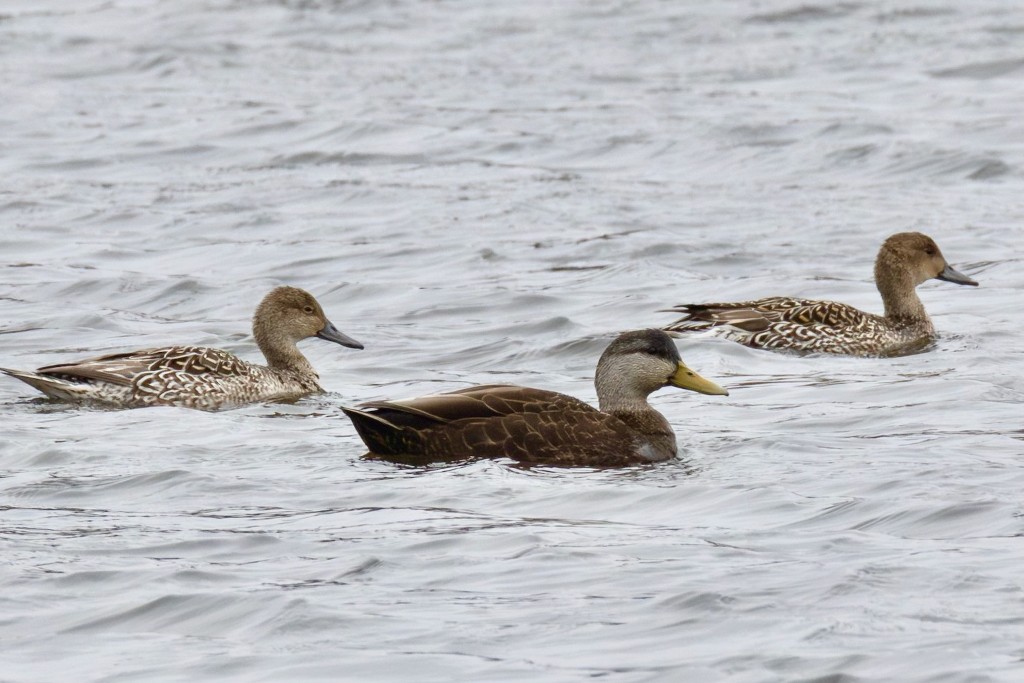
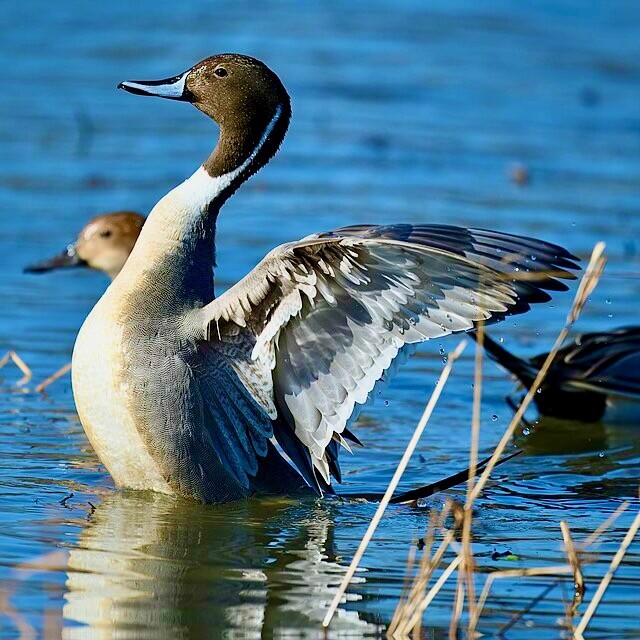
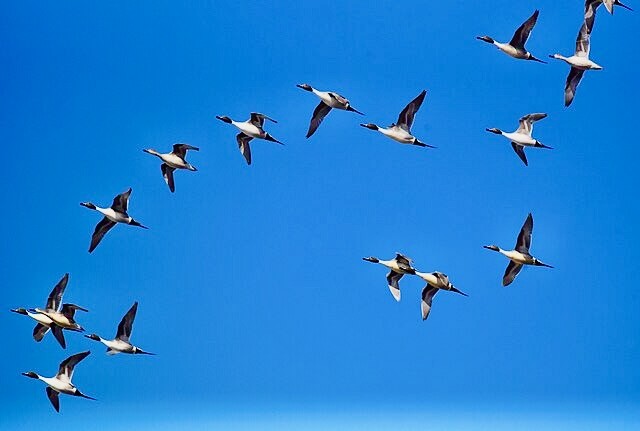
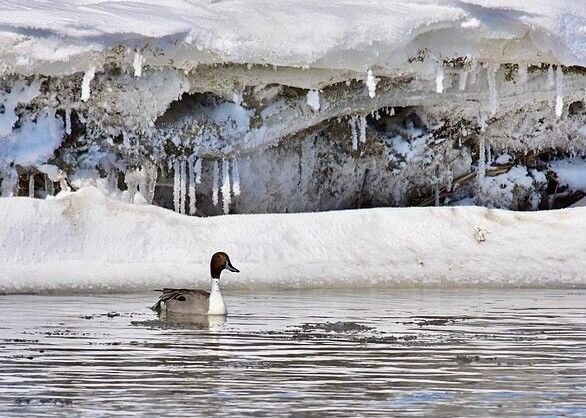
Bird records for Salter Grove date back to 2002 but the Northern Pintail was only reported for the first time in early March 2026 in the vicinity of Rock Island.
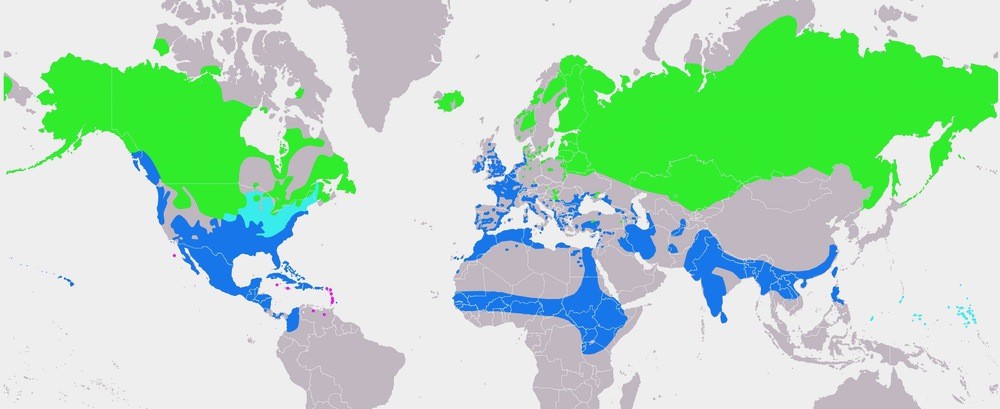
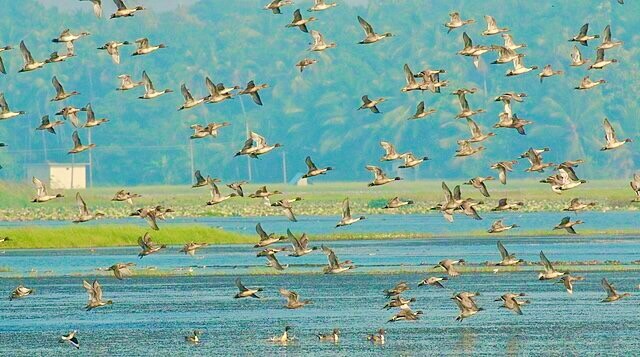
This large dabbler and favorite of hunters is one of the most numerous ducks worldwide. It is widely distributed in the Northern hemisphere but is relatively uncommon in Rhode Island. A few sightings have been recorded at nearby Passeonkquis Cove, and Apponaug Cove, but experienced birders head to South County pintail hot spots such as Tiogue Lake. Trustom and Perry Mill Ponds, where its preferred habitat of marshy wetland is more abundant.
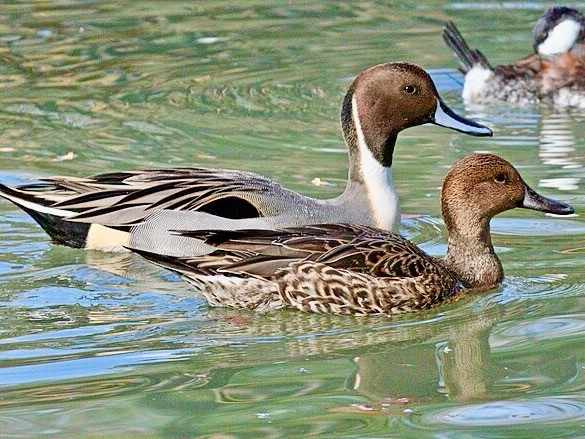
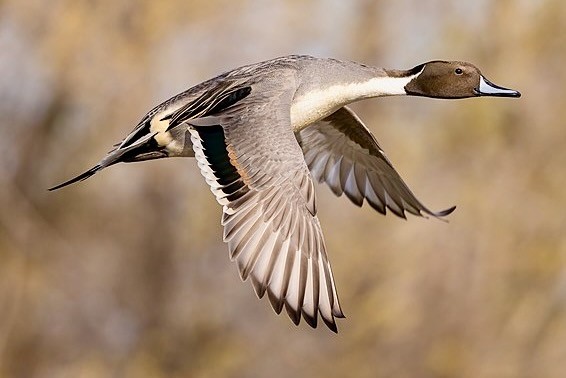
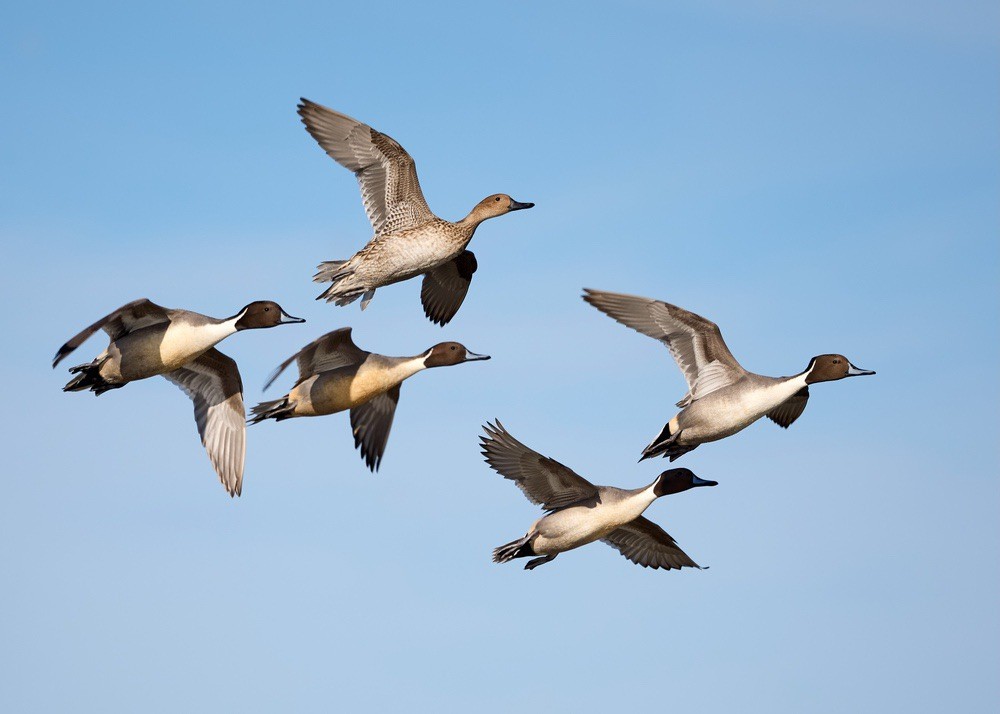
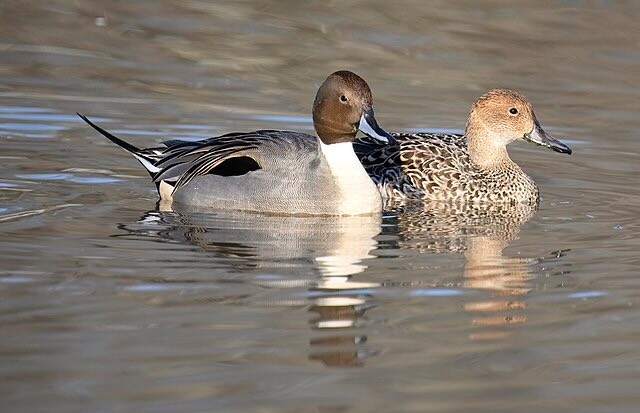
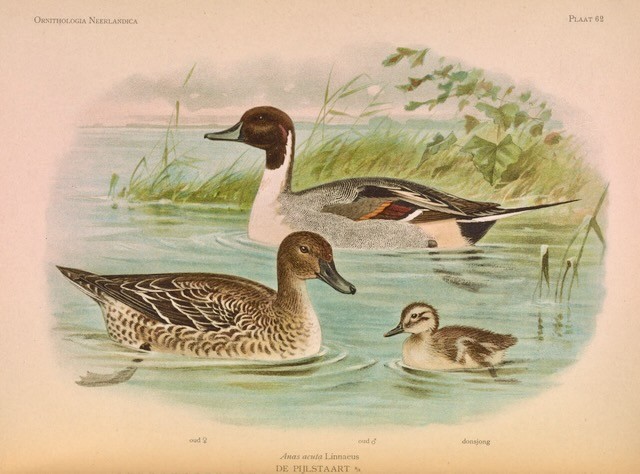
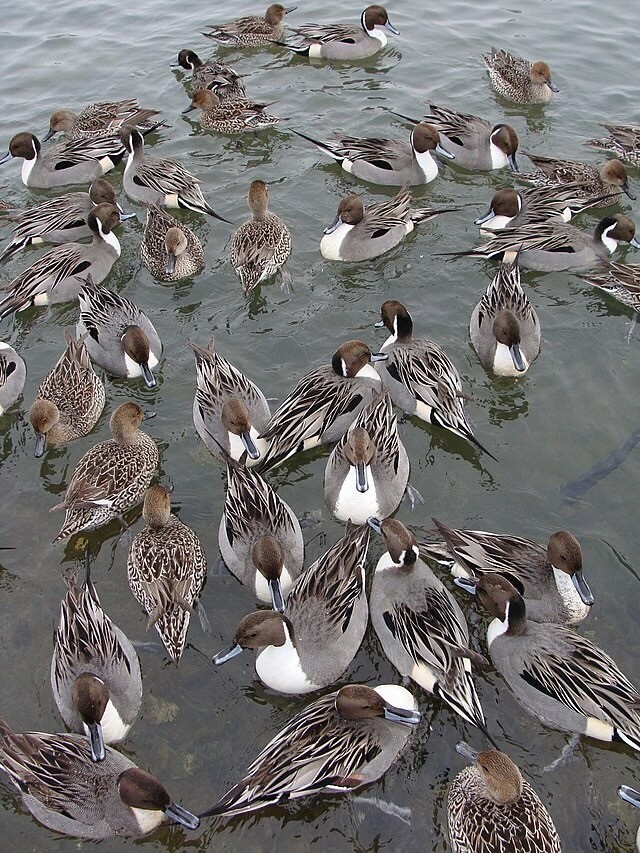
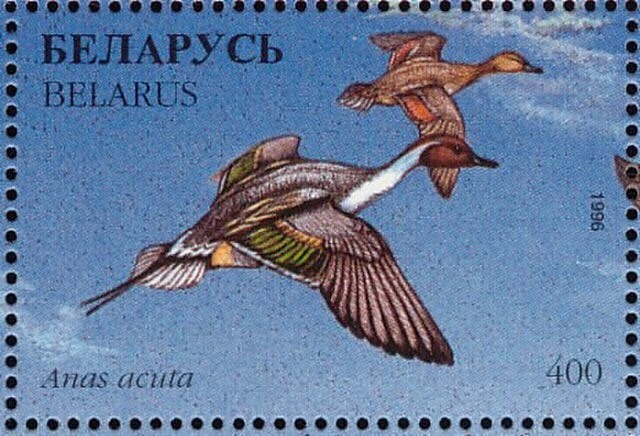
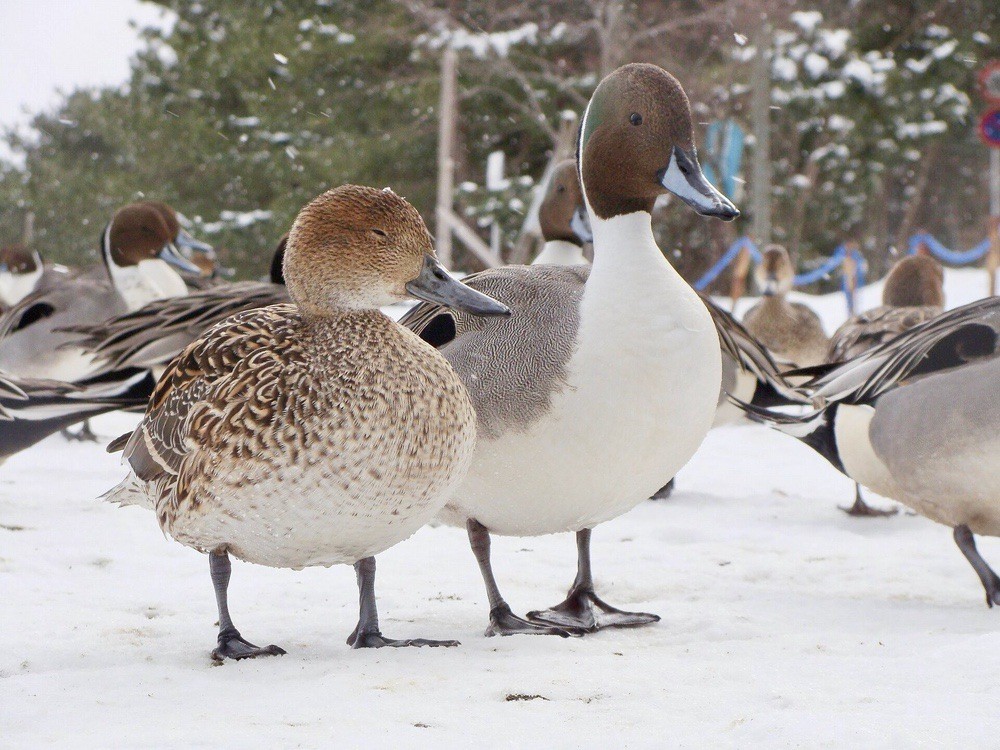
The adjective elegant is invariably used to describe the male. A white line sweeps upward along each side of the chestnut brown neck from the white front and curves around to the back of the head just shy of meeting at the nape. Long black feathers edged in grey are attractively draped on its back. Two very long central tail feathers give rise to the species' common and scientific names.
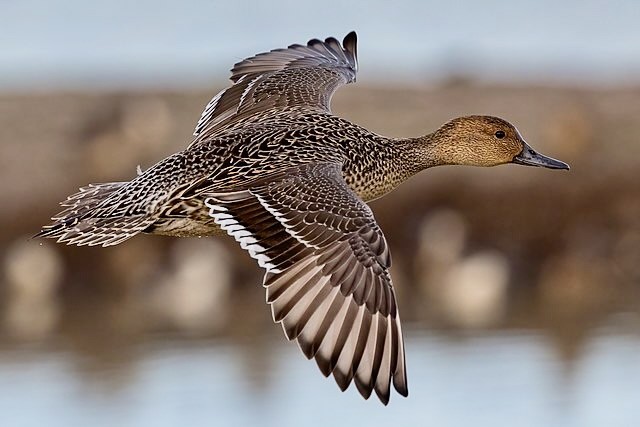
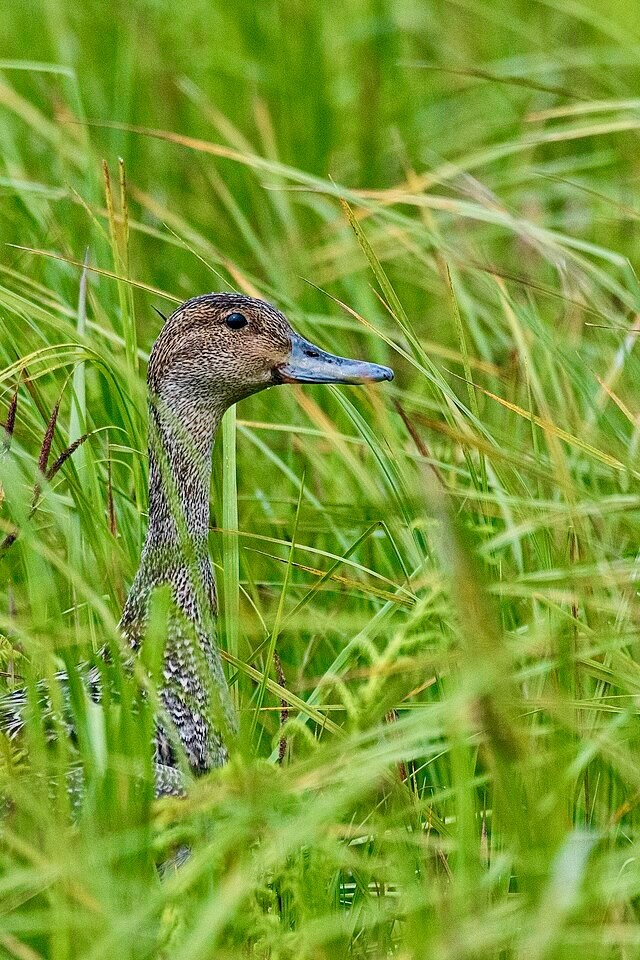
As in other dimorphic ducks, the female is mostly brown but nonetheless displays an attractively scalloped pattern of feathers on its back. The more subdued plumage of the female allows it to remain camouflaged from predators in marsh vegetations as she singlehandedly incubates the eggs until hatchlings emerge.
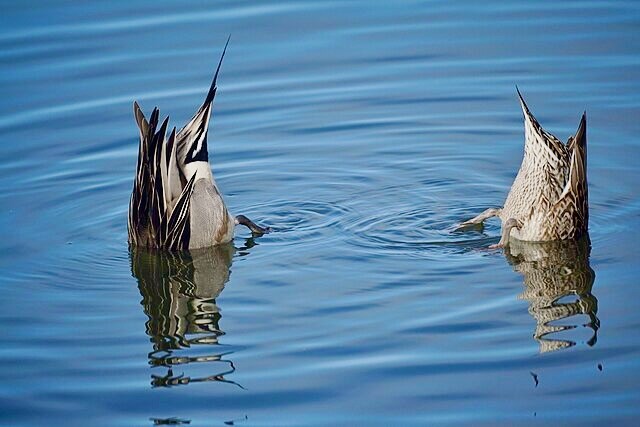
Not only does its long neck contribute to a graceful silhouette but it also allows the Northern Pintail to forage in deeper water than competing dabbling ducks such as the Mallard, which has a shorter neck. Stems, tubers and seeds from marsh vegetation dominate its diet year round with aquatic invertebrates becoming more important during the breeding season.
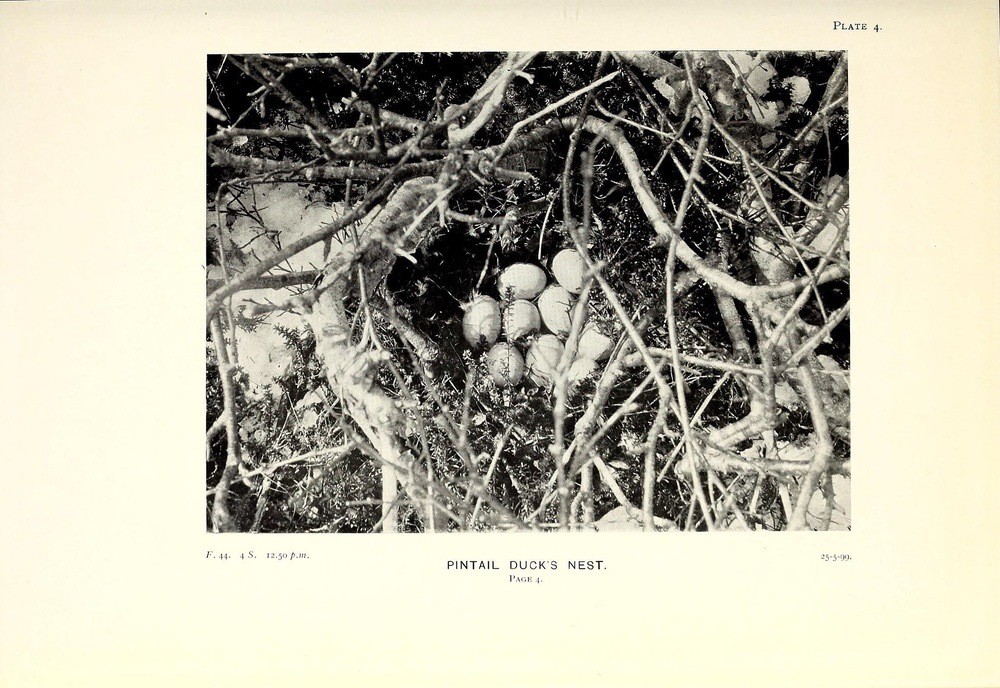
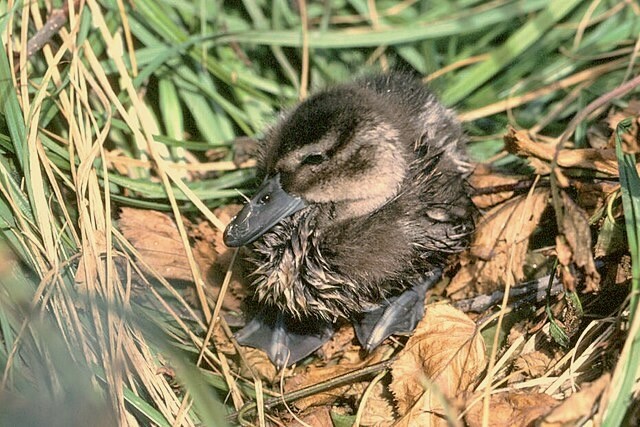
It breeds in marshy wetlands bordering the ponds and lakes of the northern North America, northern Europe and Eurasia. At times, the nest may be placed as far away as half a mile from the nearest body of water, necessitating a long hike that jeopardizes the safety of newly hatched ducklings. Grain fields are also occasionally exploited as breeding and feeding grounds but any potential advantage may be outweighed by mortality due to mechanized agricultural activities.
Historically, wintering individuals in North America concentrate along the inland water bodies, and seacoast of the southern and gulf states. In recent decades, the wintering range has expanded to the mid-Atlantic and New England states. Some North American breeders even winter in distant Hawaii, while European breeders may winter in wetlands as far south as parts of Africa and South Asia.
For more information:
https://www.allaboutbirds.org/guide/Northern_Pintail
https://www.audubon.org/field-guide/bird/northern-pintail
https://en.wikipedia.org/wiki/Northern_pintail
https://www.birdsbybent.com//////ch51-60/npintail.html
https://animaldiversity.org/accounts/Anas_acuta/
https://www.ducks.org/hunting/waterfowl-id/northern-pintail